







The Million-Dollar Job That Could Send You Broke
Winning a million-dollar contract should be cause for celebration!
It means more revenue, a growing business and, presumably, more profit.
But what if that million-dollar job is actually the job that sends your business broke?
It sounds dramatic, but it happens. Profitable businesses do not always fail because they run out of work. Sometimes, they fail because they win more work than they can afford to deliver.
That is the uncomfortable truth about growth: more work is not always better work, and profit does not necessarily mean cash.
A Profitable Job Can Still Create a Cash-Flow Crisis
Imagine you win a $1 million commercial contract with a projected gross profit of $250,000.
On paper, it looks like an excellent job.
However, before you receive your first meaningful progress payment, you may need to fund:
- Materials and supplier deposits
- Several weeks of wages and subcontractor costs
- Equipment hire
- Insurance and compliance costs
- Fuel and transport
- GST and other tax obligations
- Overheads from the rest of the business
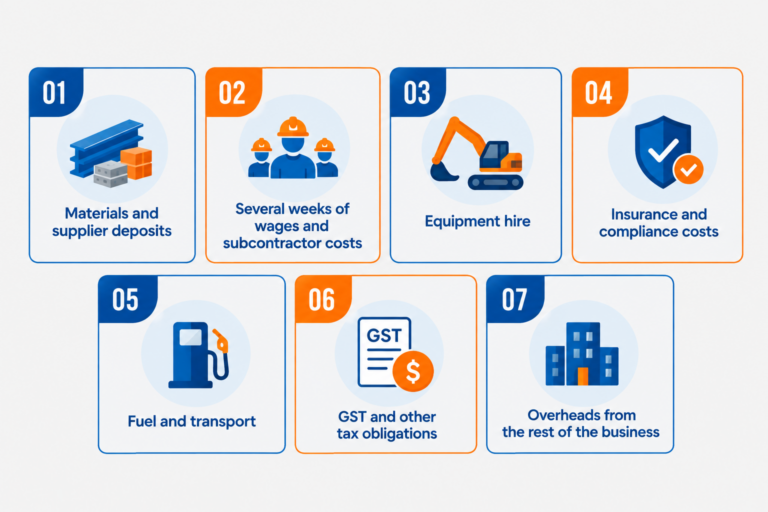
You might be carrying $150,000 or more in costs before enough cash arrives from the customer.
The job can be profitable overall and still leave you unable to pay wages next Friday. That is the difference between job profitability and job cash flow.
Profitability asks: Will this job earn more than it costs us to complete?
Cash flow asks: Do we have enough money, at the right times, to complete the job?
You need both answers before you sign the contract.
The Timing Gap Is Where the Trouble Starts
Most financial pressure occurs in the gap between paying for the work and being paid by the customer.
Your team may work this week, but the wages must be paid before the related progress claim is collected. Materials may be purchased today, but the customer might not pay for 30, 45 or even 60 days.
The contract may also require claims to be assessed, certified or approved before payment. If a claim is disputed, submitted late or pushed into the next payment cycle, the delay can become even longer. Meanwhile, your suppliers, employees and the ATO are unlikely to adopt the same relaxed timetable.
The bigger the project, the bigger this funding gap can become.
Retentions: Your Profit Being Held by Someone Else
Retentions are another common pressure point in construction contracts.
A customer may retain a percentage from each progress claim until practical completion, the end of the defects period or another contractual milestone. Even a relatively modest retention can add up quickly.
If 5% is withheld from a $1 million contract, that is $50,000 of your cash sitting somewhere else – potentially for months after you have paid the costs of earning it.
You may eventually receive the full amount, but “eventually” does not help when wages, suppliers and loan repayments are due now.
Before accepting a contract, understand:
- How much will be retained?
- When can it be claimed?
- What conditions must be satisfied?
- How long could the money realistically remain outstanding?
- Can the business operate comfortably without it?
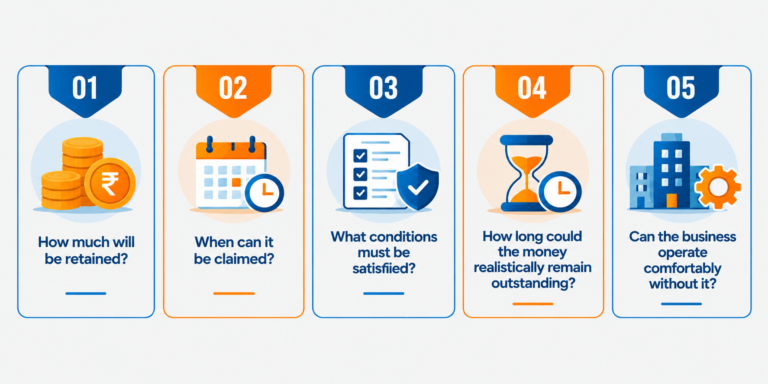
A retention is not necessarily a reason to reject a job. It is, however, a reason to properly fund it.
GST Can Create a Second Cash-Flow Hit
GST is not your money, even though it passes through your bank account. Depending on your GST reporting basis and when invoices are issued or payments received, you may have a GST liability before all the related cash has been collected.
That becomes particularly important when progress claims are large, payments are delayed or disputed, and retentions apply. The danger is treating the full amount received from a customer as available operating cash.
Then the BAS arrives, and the money that should have been set aside has already been spent funding the next stage of the project.
GST rarely causes the underlying problem. More often, it exposes a cash-flow problem that was already there.
A disciplined business forecasts its GST obligations and separates that money from the cash available to run the business.
How Much Working Capital Will the Job Need?
Before accepting a major contract, prepare a week-by-week cash-flow forecast for the job. Not simply a project budget showing total revenue and total costs. You need to know when every dollar is likely to move.
Map out:
- When materials and deposits must be paid
- When wages and subcontractors will be paid
- When progress claims can be submitted
- When those claims are realistically likely to be collected
- When GST, tax and other obligations will fall due
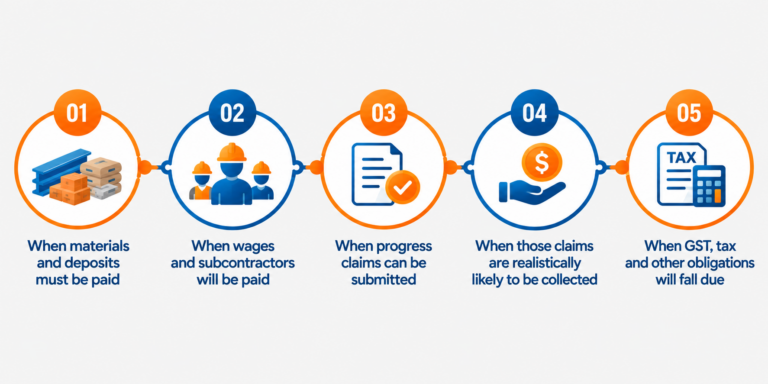
The lowest point in that forecast indicates the approximate working capital the project may require.
Then add a buffer.
Projects are delayed. Claims are disputed. Variations take time to approve. Customers pay late. Weather does not read your spreadsheet.
If the forecast shows a $200,000 cash deficit at the project’s lowest point, you need to know where that $200,000 will come from before commencing – not halfway through the job when the pressure is already on.
That funding might come from existing cash reserves, adjusted supplier terms, customer deposits, staged claims or an appropriate finance facility. The right solution will depend on the job and the financial position of the business.
The important thing, and what matters most is that it is planned for upfront and left to chance.
Five Questions to Answer Before Saying ‘Yes’
Before committing to a large project, ask:
Have all labour, materials, subcontractors, equipment, supervision, compliance costs and overheads been included? What happens to the margin if costs increase or the project runs longer than expected?
Do not rely solely on the payment terms printed in the contract. Consider approval processes, claim cut-off dates and the customer’s actual payment behaviour.
Calculate the maximum expected cash shortfall and include a sensible allowance for delays and cost overruns.
Stress-test the project. What if costs rise by 10%? What if the job runs four weeks late? What if the largest progress claim is paid 30 days later than expected? Or what if there is some other external factor occurs that is outside your control?
A new project should not leave the business unable to pay its existing team, suppliers, tax obligations or other commitments. One large job should never be allowed to place the entire business at risk.
Growth Should Strengthen the Business
A million-dollar job may be a tremendous opportunity and look terrific for your business’ capability statement. It could build your reputation, strengthen your team and take the business to another level.
But revenue alone does not make a job worthwhile.
The right job must be profitable, operationally achievable and financially sustainable. If one of those pieces is missing, growth can quickly become pressure—and pressure can become crisis.
The best time to speak with your PROTRADE coach, accountant, adviser or finance broker is before the contract is signed. Once the work has started and the cash is running out, the available choices usually become fewer and more expensive.
Winning more work can grow your business. Understanding how you will fund it is what allows you to keep it.
Let’s build a future you can look forward to. Book a 45‑minute strategy session or Call us on (07) 3875 9888 or email your enquiries to [email protected] to get started today.