

- Home
- Plan
- Grow
- Succeed
- Industries
- Family-Owned & Generational Businesses
- Professional Services (Legal, IT, Engineering)
- Construction and Trade Businesses
- E-commerce & Online Businesses
- Medical & Allied Health Professionals
- Hospitality & Tourism
- High Net Worth Individuals & Family Businesses
- Individuals and Families with Complex Structures
- Retirees and Pre-retirees
- About Us
- Resources
- Payments
- Contact Us




- Home
- Plan
- Grow
- Succeed
- Industries
- Family-Owned & Generational Businesses
- Professional Services (Legal, IT, Engineering)
- Construction and Trade Businesses
- E-commerce & Online Businesses
- Medical & Allied Health Professionals
- Hospitality & Tourism
- High Net Worth Individuals & Family Businesses
- Individuals and Families with Complex Structures
- Retirees and Pre-retirees
- About Us
- Resources
- Payments
- Contact Us
The Growth Leader – Volume 17
We hope you’re Planning, Growing & Succeeding!
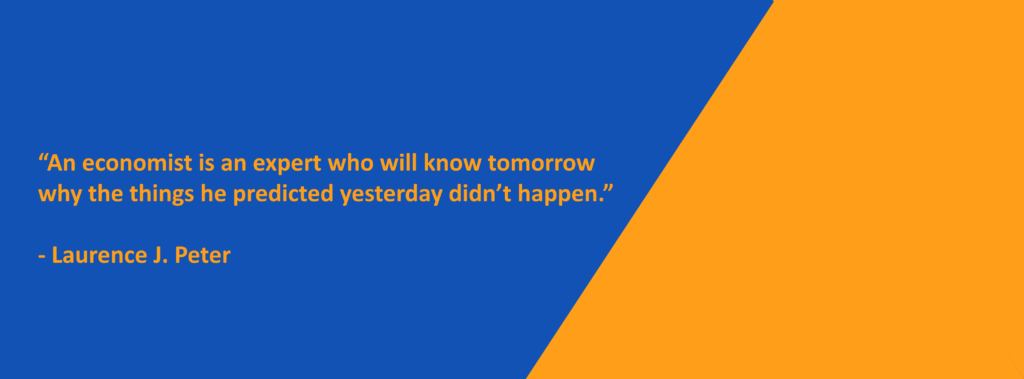
If you’ve been to a barbecue, a wedding or a kids’ footy game lately, you’ll know the drill – somewhere between the snags and the speeches, someone leans in and asks the question: “So, what do you reckon about the economy?”, or words to that affect…
It used to take a couple of ‘light refreshments’ to get there, but these days it takes about forty seconds.
And the reason is very simple – our economy has essentially been put in neutral. The engine is revving, there’s plenty of noise, and nobody is quite sure we’re going anywhere. Interest rates are up (and up, and up, and up…). The tax rulebook has been completely rewritten, and a technology revolution is either going to save us or sack us, depending on who’s holding the microphone.
So, it’s safe to say that this month we’re covering a few different topics. First, we’ll kick off with how we ended up in neutral. Then we’ll head to an article worth ten minutes of your time concerning ‘robot’s (read: AI), a book that explains economics without putting you to sleep, and we’ll bring it home with a two-minute watch that will make you feel less alone at the next social gathering.
So, without further ado, let’s hop right into it…
Welcome to Neutral Gear (or Zero Power / Regen Shutoff, or whatever it’s call in an EV)
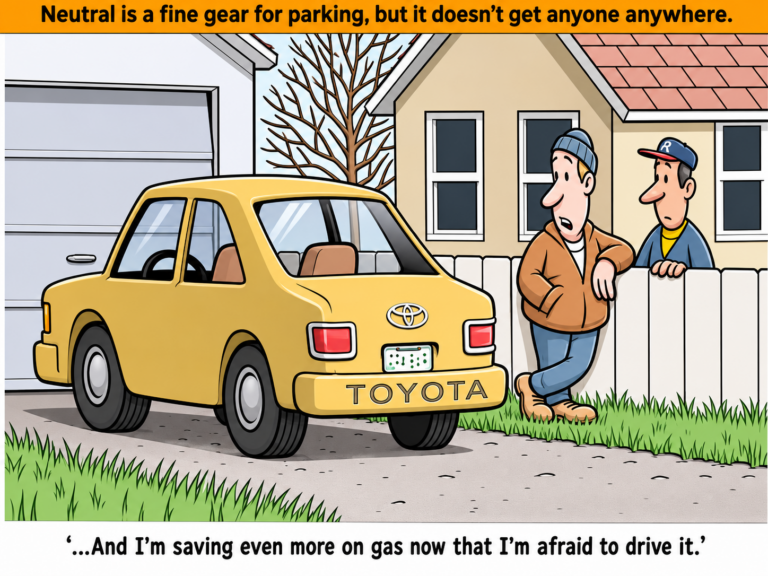
Anyone who drives an electric car knows the feeling. Lift your foot and, depending on the model, you’re coasting, in neutral or with regen switched off. Nothing goes in, nothing comes back, and the car just rolls on momentum in a very quiet cabin. To our mind that is a perfect analogy for the Australian economy right now. It’s smooth and silent… and slightly unnerving, because nobody is sure who has a foot on what.
Here’s the set-up. The Reserve Bank is on the brake. It has now raised rates five times in 2026, in February, March, May, September and, on Melbourne Cup Day, again in November. That took the cash rate to 4.85%, its highest level since 2008. Inflation reached 4.3% in September.
Here is the part we love. The RBA’s own research puts the neutral rate, the level that neither stimulates nor restrains the economy, at between roughly 3% and 4.4%, and the cash rate now sits slightly above the top of that range. Neutral, it turns out, is a gear we’ve already left behind, and even the RBA board isn’t sure about the brake.
The November vote was six to three, and the board acknowledged signs of a slowing economy, including rising unemployment. Meanwhile, Canberra is hovering over the accelerator with a forecast 2026-27 deficit of $31.5 billion. A driver with a foot on each pedal doesn’t go anywhere, they just make a lot of noise, and in an EV even the noise is missing, which is the worrying part!
The sharpest summary of how we got here is Remy Davison’s analysis for Monash Lens. He argues the budget’s headline act, negative gearing limited to new builds and the CGT discount replaced by indexation, is tax reform dressed up as housing policy. The Government’s claim of 75,000 extra homeowners over a decade works out to about 7,500 a year, a very small dent in a very big shortage. The Prime Minister’s U-turn, after ruling the changes out (50 times, no less) before last year’s election, lands the Budget in the broken-promises hall of fame, and the $250 tax offset meant to sweeten it doesn’t arrive until 2027 at the earliest.
The one place Australians have changed gear quickly is the driveway. When the Middle East conflict pushed diesel above $3 a litre, EVs hit 14.6% of new car sales in March, up from 7.5% a year earlier, while petrol sales fell about 21%. By the June quarter, EVs and hybrids together made up almost half of new car sales. Over the same stretch a four-month fuel excise discount, which cost nearly $3 billion, was wound back, and Sydney unleaded went from about 152c to 193c in around five weeks. Households, it seems read the room faster than the policymakers ever could.
In fairness, the $10 billion fuel reserve was overdue, and Davison welcomes it. But “better late than never” is a bus timetable, not a policy philosophy, and especially not in a modern Western democratic economy like Australia’s.
For your business, the lesson from the driver’s seat is that regen only works if you’re moving, and waiting for Canberra to select drive is not a plan.
That all said, we believe there are three moves worth making this month:
- Stress-test your cash flow against an RBA cash rate of 6%. With the cash rate at 4.85%, the average new owner-occupier home loan is already around 6.75%, so a 6% cash rate means a prevailing bank rate of 7.5% or more.
- Revisit your fuel, freight and energy costs, how much of each is fixed, and where you can make savings.
- Decide what you’ll do with your own foot while the system idles. What’s your next move?
The Robots are Coming
Add to the mix the other topic doing the rounds – you may have heard about – Artificial Intelligence (AI). We plan on dedicating our next edition solely to the Best, Middle and Worst Case Scenarios of AI, but for now here is a teaser on the subject.
The 2026 Intergenerational Report, released on 21 September, treats AI as one of the major forces reshaping the economy, and the Treasurer has called it ‘shaping up to be the biggest economic transformation in our lifetime.’
Treasury’s own advice is more sober. It describes AI as the first credible productivity accelerant in almost two decades but warns that uptake in Australia is slow and uneven, which risks a two-speed economy. And in a detail we couldn’t have written better ourselves, reporting from ACS Information Age notes that the industry department has stopped running its tech jobs performance measure. So, we are bracing for the biggest transformation of our lifetime while retiring one of the dashboards that might tell us how it’s going.
The practical read for business owners is less dramatic and more useful. NAB’s CEO put it bluntly last year: “…it’s not AI that takes your job; it’s the person using AI who takes the job of the person who isn’t”. Sobering words.
Read the 2026 Intergenerational Report (PS if you don’t want to read the whole report, why not download it, give it ChatGPT and ask it to ‘summarise it’ for you? Just a thought…😉)
Economics Without the Sedative
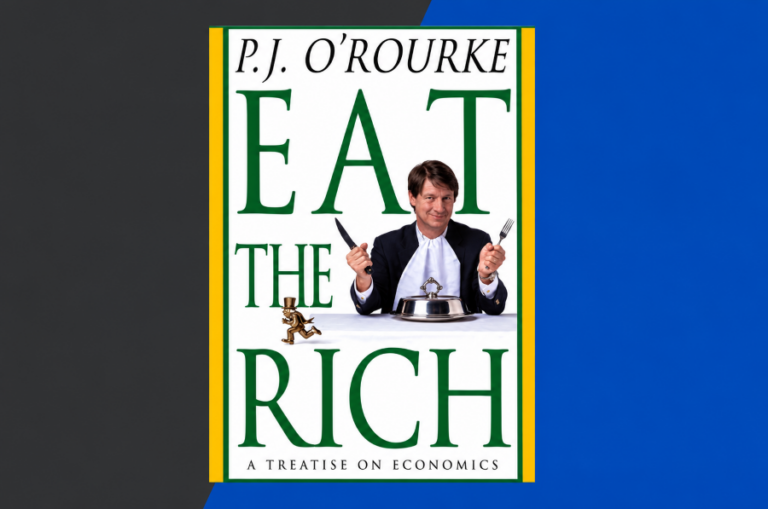
The late, great P.J. O’Rourke’s Eat the Rich: A Treatise on Economics is the book to pack for your next long-haul flight. The American political humourist sets out to answer one deceptively simple question – why do some places prosper while others just don’t? And goes looking for answers everywhere from Wall Street to Sweden to Cuba to Albania.
It’s irreverent, deliberately provocative and, as a bonus, very funny. His definition of macroeconomics is ‘money the government is out of,’ which somehow feels newly relevant.
A few honest caveats: it dates from 1998, and O’Rourke writes from a right-leaning perspective, so you may not agree with every punchline. But as a reminder that economics is about people and incentives rather than spreadsheets, it’s hard to beat.
Economics, Explained Badly (On Purpose)
For some light relief, we’re going local. Australian satirists Clarke and Dawe mocked economic orthodoxy for decades, and their sketch on the G20 meeting in Brisbane is a classic of the genre, with the economic strategist cheerfully explaining that growth comes first and the other things can be dealt with afterwards, “whatever they are.”
It’s from 2014, and that’s the point. The wording changes, the format doesn’t, and every few years you could swap in a new government and run it again.
Questions Worth Discussing Around Your Board Table
✅If rates move again in February, what’s our plan? And if they don’t, does anything actually change?
✅Where in the business is a decision being avoided because the information isn’t perfect yet?
✅If leadership changed hands tomorrow, what would our successor need to know that isn’t written down anywhere?
✅What’s one big-ticket decision we made recently that got less scrutiny than it deserved?
🚦Business Strength Assessment🚦
The questions above – and plenty more – are exactly what we work through with our Board of Advice clients every quarter.
Rate calls, budget cycles, succession pressure, none of it waits for a convenient time.
The businesses that come out ahead are the ones that have already pressure-tested their plan. If you’d like a second set of eyes on yours, we’d love to help.
Book a Strategic Business Review here.
No obligation. No cost. Just a genuine one-on-one conversation.
And take a moment to watch our video on precisely why we created the Board of Advice Program here. We believe it’s a powerful Call To Action.
Until next time, keep Planning, Growing & Succeeding!
Let’s build a future you can look forward to. Call us on (07) 3875 9888 or visit www.4front.net.au to get started today.