





The Growth Leader – Volume 14
We hope you’re Planning, Growing & Succeeding!
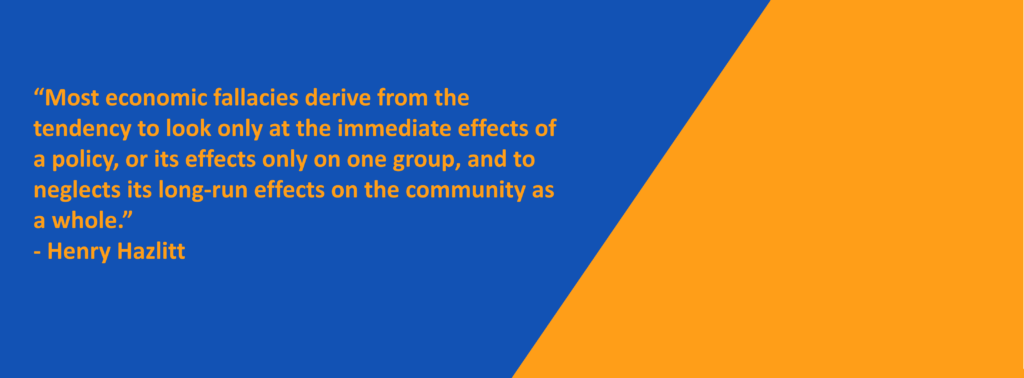
There’s an old saying attributed to Warren Buffett, “Only when the tide goes out do you discover who’s been swimming naked.”
The last few years have been an interesting tide to say the least. Cheap money, Government stimulus, strong demand, rising asset prices and as a result, many businesses have mistaken favourable conditions for great management.
But now it feels as though that tide is receding.
Costs remain elevated, customers are more selective (and demand more, with more choice then ever), margins are being squeezed, and to boot, Governments continue to spend money like drunken sailors – money they know they don’t have.
What does this all mean? Challenges, challenges, challenges.
Yet here’s the thing… Every challenge creates opportunity.
In fact, we’d argue that some of the best businesses in Australia over the next decade will be built during periods like this. Not because conditions are easy, but because competitors become distracted, complacent, or paralysed.
This month we’re exploring two themes:
- Why challenging conditions often create the greatest opportunities.
- What the 2026 Federal Budget means for Australian business owners.
So, without further ado, let’s hop right into it…
Challenge Creates Opportunity
History is littered with examples of businesses that thrived during difficult times.
Microsoft was founded during an economic slowdown.
Airbnb emerged during the Global Financial Crisis (GFC).
And countless Australian businesses have been born during recessions, downturns and periods of uncertainty.
Why? Because difficult conditions force discipline.
Weak business models are exposed. Lazy thinking gets challenged. Waste gets eliminated.
And whilst everyone else is retreating, the best operators are quietly positioning themselves for the future.
We recently came across this excellent Harvard Business Review article, Roaring Out of Recession
The research found something fascinating – companies that balanced cost discipline with strategic investment during downturns significantly outperformed their peers when conditions improved. Not reckless spending. Not panic-cutting. Disciplined execution.

Are we heading for a recession? Nobody really knows. But here’s what we do know: every recession leaves behind a trail of business owners who were convinced it couldn’t happen. If tougher times are coming, we’d rather you were overprepared than standing around wondering what happened.
The Federal Budget: What’s Really Going On?
Every Federal Budget is presented as a ‘gift’. A helping hand for Australians that will boost productivity, provide a pathway to prosperity.
But let’s be honest. Governments don’t create wealth – businesses do. Entrepreneurs do. Workers do. Investors do. Capital does.
The Budget simply decides where existing wealth gets redistributed and how much additional debt gets accumulated along the way.
For a balanced overview, the Treasury Budget papers can be found here: Australian Government Budget 2026-27
The headline themes are familiar:
- Cost-of-living relief
- Infrastructure spending
- Housing initiatives
- Business incentives
- Increased government expenditure
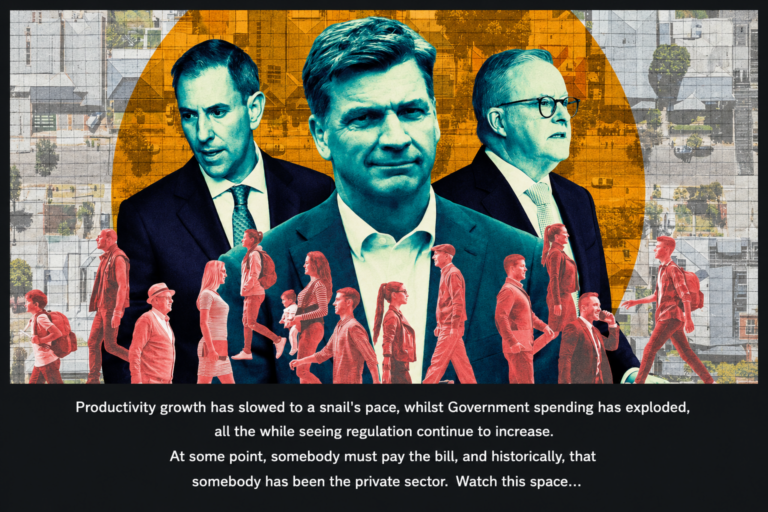
The uncomfortable truth that no one in Government wants to face is that Australia has become very good at talking about growth and becoming less good at generating it.
The Productivity Challenge Every Business Owner Should Be Watching
The Productivity Commission recently revealed that Australia’s productivity growth is sitting near historic lows. What’s particularly concerning isn’t a lack of investment – it’s what the Commission described as a “creeping inefficiency” and failure to adopt and apply new ideas effectively. In other words, we’re not getting enough return from the resources, technology, and talent already available to us.
👉 Australia’s Productivity Performance – Productivity Commission
The Productivity Commission continues to highlight a simple truth: Long-term prosperity comes from producing more value with the same resources. Not from stimulus. Not from subsidies. Not from government programs. And certainly not from more regulation, red tape, and bureaucracy.
It comes from productivity.
For SME owners, that means:
- Better systems
- Better people
- Better technology
- Better decision-making
- And perhaps most importantly: Doing less but doing it better.
Too many business owners are waiting for external conditions to improve. Interest rates, Government policy, consumer confidence, and so on, but the best businesses we know don’t wait. They improve themselves. And that is why they continue to outperform.Australia doesn’t have an inflation problem, a tax problem, or even an interest rate problem. At its core, Australia has a productivity problem.

Questions Worth Discussing Around Your Board Table
As we head toward the start of FY27, here are a few questions worth asking:
✅ If revenue fell by 15%, what would we do?
✅ Where are our biggest opportunities whilst competitors are distracted?
✅ What is one productivity improvement that would materially improve our business?
✅ Are we waiting for the economy to improve, or improving despite the economy?
🚦 Business Strength Assessment 🚦
The questions above and many more are the precise topics we discuss with our Board of Advice clients every quarter.
Because the reality is this: The businesses that thrive over the next few years won’t necessarily be the biggest. They won’t necessarily be the smartest. And they certainly won’t be the ‘luckiest’.
They will be the businesses that are best prepared.
If you’d like to pressure-test your business, identify hidden risks, and uncover opportunities that others are missing, we’d love to help.
No obligation. No cost. Just a genuine one-on-one conversation.
We’ll finish this month’s edition with how we started – when the tide goes out, some businesses discover they’re swimming naked.
Others discover they can finally see where the opportunities are.
Which one do you want to be?
Until next time, keep Planning, Growing & Succeeding!
Let’s build a future you can look forward to. Call us on (07) 3875 9888 or alternatively email your enquiries to [email protected] to get started today.